

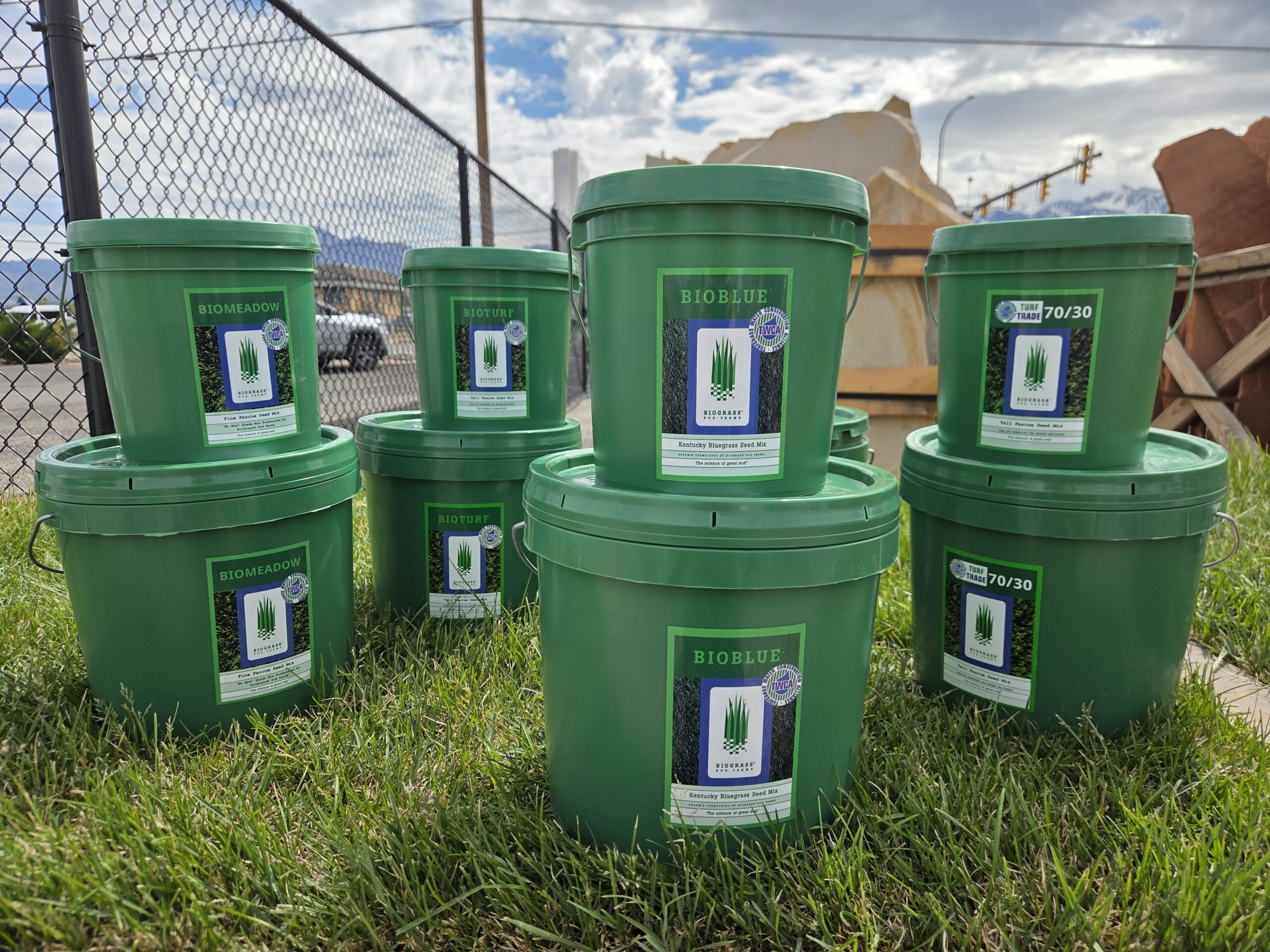
If your lawn came out of summer with bare patches, thin spots, or areas that never quite filled in, September and October are some of the best times to start filling those areas back in. For many Utah lawns, early fall offers a reliable window for overseeding before colder weather fully settles in.
What Is Overseeding?
Overseeding is the process of spreading grass seed into an existing lawn instead of removing the turf and starting over. It is a practical way to improve a lawn that still has healthy grass but needs more density or better coverage.
Homeowners commonly overseed to:
- Fill bare patches and thin areas.
- Thicken a patchy lawn after summer stress or wear.
- Introduce new grass varieties into an existing lawn.
- Improve the overall look and consistency of the turf.
Why September Through Mid-October Works Best
In early fall, the soil is still warm while air temperatures are starting to cool. That combination supports germination while reducing the pressure young seedlings can face during peak summer heat. Additionally, your newly seeded grass requires less water in the fall.
As fall gets colder, germination can slow, and new grass has less time to establish before winter. That is why September through about mid-October is usually the best target when you have flexibility.
How to Overseed a Patchy Lawn
A little preparation can make a noticeable difference when you overseed. Before spreading seed, focus on clearing the areas that need new growth and making it easier for the seed to reach the soil.
- Mow and clean up the lawn. Mow a little shorter than normal, then remove clippings and loose debris so seed is less likely to get caught in the existing grass.
- Open up thin or compacted areas. Lightly rake bare spots or aerate compacted sections to give the seed better access to the soil.
- Choose seed that fits your lawn. Match the seed to your existing turf, sun exposure, water needs, and how you use the lawn. If you are not sure what fits your Utah yard, ask BioGrass before you buy.
- Spread the seed evenly. Pay extra attention to bare patches, but avoid putting too much seed in one area. Lightly rake where needed after spreading.
- Keep the seeded area consistently moist. New seed needs regular moisture during germination. Water lightly enough to avoid puddling or washing seed away, and limit foot traffic while seedlings get established.
For more detailed instructions on preparing, spreading, and caring for new seed, use the BioGrass seeding guide as you plan your project.
What If You Miss the Fall Window?
Overseeding is still possible outside the September to mid-October window, but timing becomes less forgiving.
- Late October or early November may still work, but colder conditions can slow germination. The later you seed, the less time new grass has to get established before winter, which is why September through mid-October remains the more reliable fall window.
- Spring is another option. You can seed as early as February, but if conditions are still very cold, waiting until temperatures begin to moderate can give the seed a better opportunity to germinate and establish.
Know When Overseeding Makes Sense
A patchy lawn does not always mean starting over. When most of the existing turf is still healthy, overseeding can be a practical way to add density and improve coverage without replacing the entire lawn. In addition to thickening up your lawn, using TWCA-qualified cultivars to overseed will help reduce water usage long-term.
Browse BioGrass sod and seed products or contact the BioGrass team for help choosing the right seed and deciding what makes sense for your yard.