

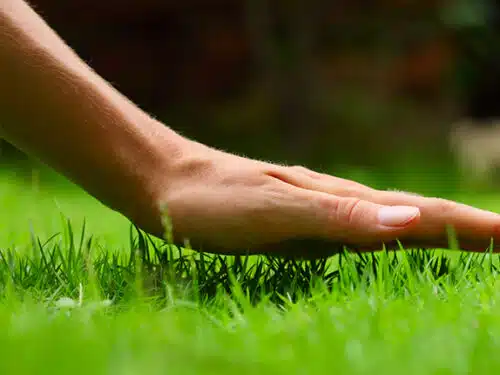
How to Water & Maintain Your New Lawn
- During Installation: Lightly sprinkle water on the bare soil as you install your new lawn.
- This will cool the soil providing a better environment for new, tender roots.
- Using a hose, water each piece of sod within 15 minutes of being laid on the soil.
- Immediately After Installation: Give your new lawn one inch of water within 1/2 hour of completed installations.
- When finished, the lawn should be “squishy wet.”
- This is the only time you will water the sod making it “squishy wet.”
- Frequency: Water your new lawn enough to keep it consistently moist throughout the hottest part of the day for the first few weeks.
- Short, frequent waterings are best. Shorter for spray heads, longer for impact or rotors.
- Moisture Level: Keep your new lawn moist but do not soak. Water as needed to maintain adequate moisture.
- New BioGrass lawn establishment usually takes between 2 and 5 weeks, depending on weather, yard conditions, etc.
- Sprinklers: Change your sprinkler timer according to the demands of your lawn, and the environment. Common factors are: wind, rain, sunlight, shade and reflected light.
- If you see gaps appearing in the seams of your sod that is an indicator that the sod is drying out too much between waterings.
- Please note: sod near concrete or park strips may require more water and sod in shady areas may require less
How to Establish Deeper Roots
- Watering Frequency – Lawns with deep root systems are more healthy and use less water.
- Avoid light frequent watering on established lawns. Applying water in less frequent waterings allows water to soak deeply into soils.
- This will allow roots to use water in the ground rather than only surface water, making your lawn more drought-tolerant.
- Cycle & Soak – This lawn watering method allows water to soak deep into your soil.
- This works by dividing the current run time into three separate cycles
- For example: If you are currently watering 21-minute cycles, water only 7 minutes per cycle.
- Once you have completed the first seven-minute cycle, run a second and third cycle.)
- This will allow an air pocket to form between the three layers of water, pushing the water deeper into the soil.
- This works by dividing the current run time into three separate cycles
- Watering Amount – Water usage averages are affected by many variables.
- Water usage may need to be increased due to poor soil, wind, excessively high temperatures, sod near reflective surfaces (fences, brick walls), or in areas where run-off may occur (on slopes or hills).
- Water usage may need to be decreased in shady areas.
*See www.conservewater.utah.gov for more information
Watering with Lawn Sprinklers
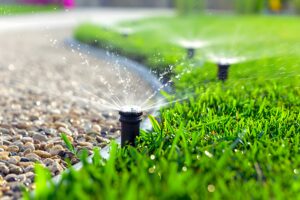
Adjusting Your Sprinkler System for Best Efficiency
- Mark Can – Using a straight-edged can mark off 1 inch.
- Run Test – Place several cans in a grid pattern throughout test area. While keeping time, run sprinklers until cans reach 1-inch mark. Test all cycles and areas for thorough coverage.
- Establish Schedule – Using test results refer to this guide to establish your watering schedule.
- Dry Spots – If dry spots appear, check your sprinkler system’s coverage. Water the dry spots by hand rather than increasing your irrigation timing to compensate for a few dry spots.
- Maintenance – Adjust and maintain sprinkler settings on a regular basis.
Lawn Watering & Maintenance Tips
- Keep a regular mowing schedule, once a week on average (see Mowing Guide).
- Keep grass at an average of 2-3 inches. Longer grass uses less water.
- Never cut more than 1/3 of the leaf blade per mowing.
- Keep mowing blades sharp as dull blades can damage or even ruin grass.
- Fertilize lawn on a regular schedule (See Fertilizing Guide).
- Too much water can be just as harmful as too little. Be sure to check sprinklers often to efficiently maintain water use.