
If you’re looking to aerate your lawn this year, you’re making a good decision that will help keep your lawn healthy and lush. But did you realize that you actually have multiple options for the lawn aeration format you use?
At BioGrass Sod Farms, we’re here not just to offer a huge range of landscaping products to clients around Salt Lake City, but also to provide expertise in important landscaping areas for our clients. Our aeration guide, for instance, helps clients understand the benefits of aeration and offers some tips on aerating sod. The two most common forms of aeration are core and spike – how do core vs spike aeration compare, and which is right for your lawn? Let’s break it down!
What is Core Aeration?
For those just learning about lawn care, aeration is the process of poking small holes in your soil to allow for better airflow and nutrient absorption. Core aeration takes this one step further by removing plugs or “cores” of compacted soil from your lawn. These cores are typically around 2-3 inches long and can range in diameter from 1/4 inch to over an inch. The removal of these plugs helps to break up compacted soil and allows for better movement of air, water, and nutrients within the soil.
Core aeration is usually done using specialized equipment called a core aerator. This machine has hollow tines that penetrate the soil and extract the plugs as it moves across the lawn. It offers several key benefits:
- Reducing compaction: Regular foot traffic and heavy equipment can cause soil compaction, making it difficult for roots to grow and absorb nutrients. Core aeration helps to alleviate this problem by creating channels in the soil for air, water, and nutrients to reach the roots.
- Improving nutrient uptake: By creating openings in the soil, core aeration allows for better absorption of fertilizers and other nutrients applied to the lawn. This leads to healthier and stronger root systems.
- Enhancing microbial activity: The process of removing plugs also brings up beneficial microorganisms from deeper layers of the soil to the surface. These microbes help break down thatch (a layer of dead grass) and organic matter, improving overall soil health.
Core aeration tends to be best for heavy clay soils that tend to compact easily, as well as lawns with heavy foot traffic. It is recommended to aerate at least once a year for optimal results.
What is Spike Aeration?
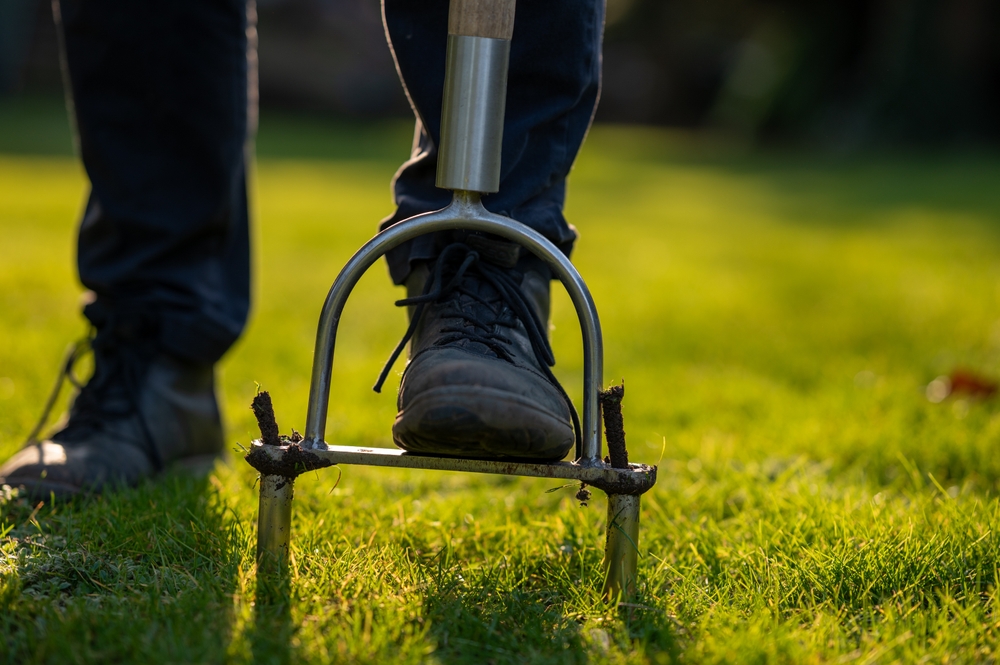
Spike aeration, on the other hand, refers to a method of aerating soil using solid tines or spikes. Unlike core aeration, which removes plugs of soil, spike aeration simply creates holes in the soil.
This method is often used as a quick fix for compacted soils, but it may not be as effective as core aeration in the long term. The holes created by spikes tend to close up quickly, restricting air and water flow.
However, spike aeration can still provide some benefits, such as allowing fertilizer and nutrients to penetrate deeper into the soil and promoting root growth. It also helps relieve surface compaction, making it easier for water and oxygen to reach plant roots. It’s typically best for sandy or loamy soils.
Seasonal Timing
When it comes to core vs spike aeration, both methods should involve some seasonal planning – and this should also be connected to your grass type. For cool-season grasses, aeration is typically best in the spring or fall; for warm-season grasses, the late spring or summer is best.
You should avoid aerating during periods of drought or extreme temperatures, as this can cause unnecessary stress to the grass. Additionally, it’s important to avoid aerating when the ground is frozen or overly saturated with water.
Other Factors to Consider
Here are a few other factors to consider when deciding between core vs spike aeration:
- Soil type: If you have heavy clay soil, core aeration may be more beneficial as it can help improve drainage and reduce compaction.
- Traffic: Lawns that experience high levels of foot traffic or heavy machinery use may benefit from more frequent aeration with spikes rather than cores. This is because the spikes create less disruption to the overall surface area compared to cores.
- Budget: Core aerators tend to be more expensive than spike aerators, so if you’re on a tight budget, spike aeration may be a more cost-effective option.
At BioGrass Sod Farms, we’re happy to help with expertise in areas like these, plus offer a huge range of landscape materials. Contact us today or view our aeration guide for more info!